
 English
 عربى
عربىTarp for Truck Cover




Content
PVDF tensile membrane fabric represents a high-performance architectural material composed of a woven base fabric coated with polyvinylidene fluoride (PVDF), creating structures that combine aesthetic beauty with exceptional durability. This advanced material enables architects and engineers to design striking lightweight roofing systems, canopies, and facade elements that span large distances without intermediate supports. The PVDF coating provides superior weather resistance, self-cleaning properties, and remarkable longevity, making it the premium choice for permanent architectural membrane structures worldwide.
Unlike traditional building materials, PVDF membranes function as stressed-skin structures where the fabric itself carries loads through controlled tension rather than compression or bending. The material typically consists of high-tenacity polyester or fiberglass base fabric coated on both sides with PVDF fluoropolymer formulations. This combination delivers tensile strengths exceeding 400 kN/m while maintaining translucency that creates naturally lit interior spaces. PVDF membranes have proven themselves in demanding applications from sports stadiums and airport terminals to cultural venues and commercial complexes, offering service lives exceeding 30 years when properly designed and maintained.
The foundation of PVDF membrane begins with carefully engineered base fabrics designed for structural applications. High-tenacity polyester yarns, typically 1100 to 3300 dtex, are woven in specific patterns that balance strength in warp and fill directions while minimizing crimp that could cause dimensional instability. Panama weave construction, where multiple yarns are grouped together, provides optimal coating penetration and structural efficiency. The fabric undergoes heat-setting processes that stabilize dimensions and remove internal stresses, ensuring the material maintains precise geometry under tension. Alternative base fabrics using E-glass or PTFE-coated fiberglass yarns offer even higher strength and near-zero thermal expansion for applications demanding maximum dimensional stability.
Applying PVDF coating requires sophisticated processing equipment and precise quality control. The base fabric passes through coating lines where liquid PVDF formulations containing fluoropolymer resins, pigments, stabilizers, and processing aids are applied using knife-over-roll or dip coating methods. Multiple coating passes build total coating weights from 800 to 1200 g/m², with each layer cured in ovens at temperatures exceeding 350°F to fuse the PVDF and create durable bonds with the substrate. Top coat layers may incorporate additional UV stabilizers and self-cleaning additives that enhance surface properties. The coating completely encapsulates fabric yarns, protecting them from environmental degradation while creating smooth surfaces that resist soiling and facilitate cleaning.
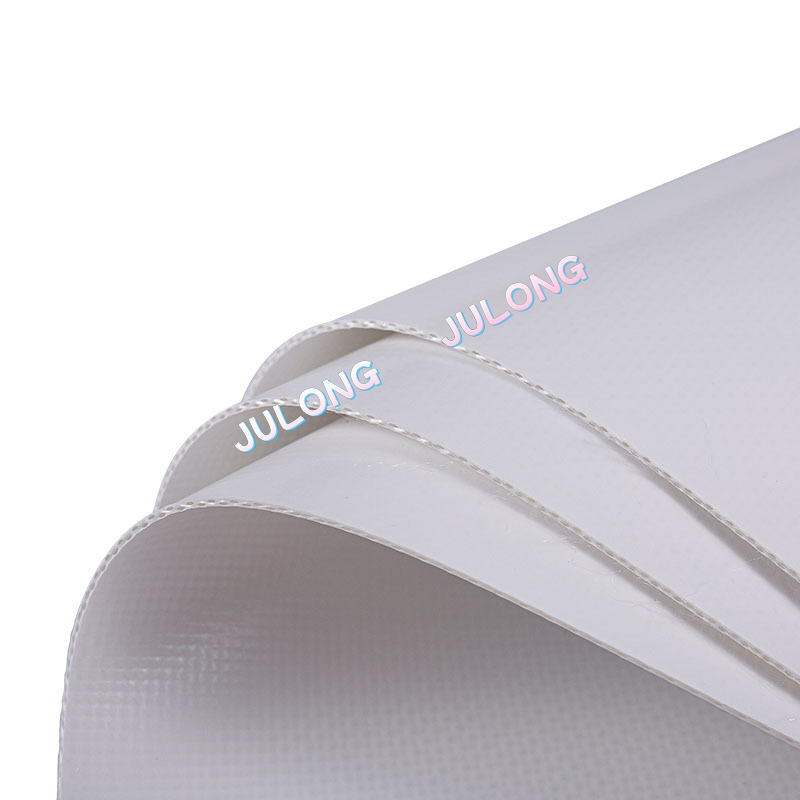
PVDF membrane manufacturers adhere to stringent international standards governing material properties and performance. Testing protocols verify tensile and tear strength, coating adhesion, UV resistance, flame retardancy, and long-term weathering characteristics. Accelerated aging tests subject materials to thousands of hours of UV exposure, thermal cycling, and moisture conditioning to predict outdoor service life. Quality assurance programs monitor every production batch, measuring coating thickness, weight, color consistency, and mechanical properties against specifications. Certification from independent testing laboratories provides third-party verification that materials meet architectural standards including MSAJ/M-02 in Japan, European standards, and manufacturer-specific performance guarantees backing warranty commitments.
| Property | Typical Values | Performance Benefit |
| Tensile Strength | 280-480 kN/m | Enables large span structures |
| Tear Strength | 400-800 N | Resists damage propagation |
| Weight | 900-1400 g/m² | Lightweight structural system |
| Light Transmission | 6-18% | Natural daylighting |
| Service Life | 25-35+ years | Long-term durability |
| Temperature Range | -40°F to 180°F | Global climate adaptability |
PVDF coating provides exceptional resistance to environmental degradation that ensures decades of reliable service. The fluoropolymer molecular structure exhibits outstanding UV stability, maintaining mechanical properties and color integrity through continuous solar exposure. Unlike lesser coating materials that chalk, fade, or become brittle, PVDF membranes retain flexibility and strength throughout their service life. The material resists temperature extremes from Arctic cold to tropical heat without cracking or softening. Chemical inertness protects against acid rain, industrial pollutants, and biological growth including algae and fungi. This comprehensive weather resistance makes PVDF membranes suitable for installation in any climate from desert environments to coastal locations with salt spray exposure.
Advanced PVDF formulations incorporate self-cleaning properties that minimize maintenance requirements and preserve aesthetic appearance. The coating's low surface energy prevents dirt adhesion, allowing rainwater to wash away accumulated dust, pollen, and organic matter naturally. Some premium formulations include photocatalytic titanium dioxide that breaks down organic contaminants through UV-activated oxidation reactions. This self-cleaning action maintains high light transmission and bright surface appearance without manual cleaning for years between routine maintenance. The smooth, non-porous surface also resists bacterial colonization and biological staining that can degrade other architectural materials, contributing to hygiene in public spaces and reducing cleaning costs over the structure's lifetime.
PVDF membranes excel in covering large sports venues where column-free spaces and natural lighting create ideal athletic environments. Stadium roofs spanning hundreds of meters protect spectators while maintaining open, airy atmospheres enhanced by diffused daylight filtering through translucent membranes. The lightweight material reduces structural dead loads compared to conventional roofing, enabling longer spans and more dramatic architectural forms. Swimming pool enclosures benefit from PVDF's resistance to chlorine vapors and high humidity that rapidly degrade other materials. Tennis courts, equestrian arenas, and multi-purpose sports halls use PVDF canopies providing weather protection without the enclosed feeling of solid roofs, supporting year-round facility use regardless of outdoor conditions.
Airports, train stations, and transit terminals increasingly incorporate PVDF membrane roofing systems that combine functional performance with architectural distinction. The material creates bright, welcoming spaces where natural daylight reduces energy consumption and improves passenger experience. Translucent canopies over platforms and walkways provide weather protection while maintaining visual connection to surroundings. PVDF's fire resistance meets stringent safety codes for public assembly spaces and transportation facilities. The material's ability to span large distances without intermediate columns facilitates flexible interior layouts and unrestricted pedestrian flow. Low maintenance requirements and extended service life make PVDF economically attractive for infrastructure projects where long-term performance justifies premium initial investment.
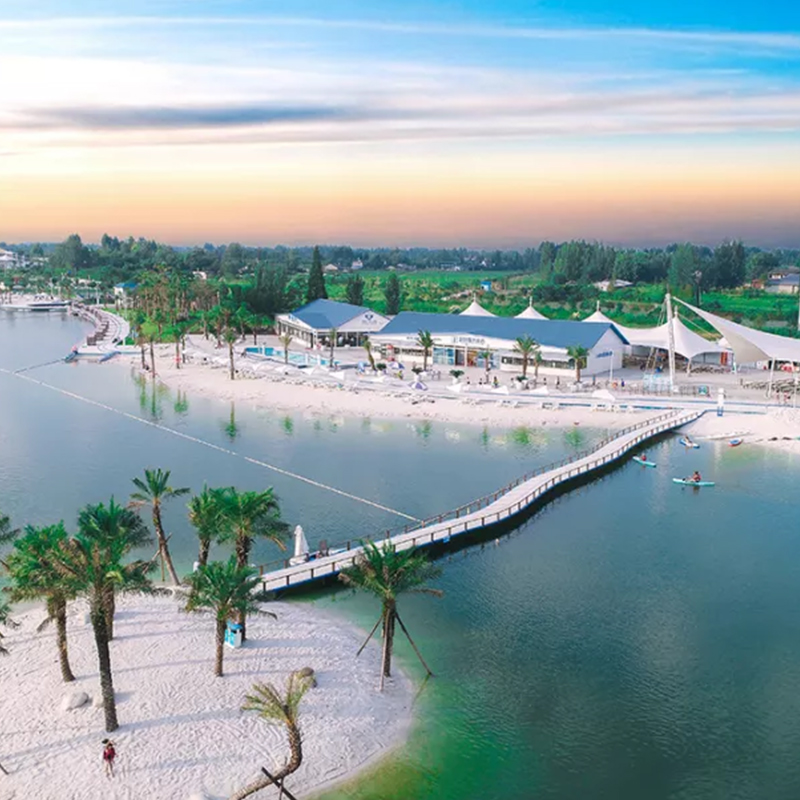
Shopping centers, exhibition halls, museums, and performing arts venues utilize PVDF membranes for dramatic entrance canopies, atriums, and signature architectural features. The material enables creative forms impossible with conventional construction including curved, twisted, and organically shaped surfaces that serve as landmarks and brand identifiers. Printable PVDF membranes accept custom graphics and patterns, transforming functional roofing into artistic expressions. Interior applications include acoustically engineered ceiling systems where membrane panels control reverberation while providing attractive visual surfaces. Facade applications use PVDF as rain screens or sunshades, regulating solar heat gain while creating dynamic building envelopes that respond to environmental conditions.
Creating PVDF membrane structures begins with sophisticated computer modeling that translates architectural concepts into buildable geometries. Specialized software analyzes the three-dimensional form, calculating stress distribution and determining optimal pre-stress levels. Form-finding algorithms generate cutting patterns that account for material properties, stress distribution, and fabrication constraints. These digital patterns guide automated cutting equipment that precisely shapes membrane panels from master rolls. Fabrication facilities join individual panels using hot-air welding that creates seams stronger than the base material. Quality control during fabrication verifies seam strength through destructive testing of samples and visual inspection of completed welds. The finished membrane panels, complete with reinforcing patches at attachment points, ship to construction sites ready for installation.
Installing PVDF membranes requires skilled crews working with specialized equipment under controlled conditions. The supporting structure including steel or cable frameworks must achieve precise geometry before membrane installation begins. Installation typically occurs during calm weather to prevent wind damage to unstressed membrane. Crews unfold panels and connect them to boundary cables, edge beams, or mast tops using clamping systems, lacing cables, or keder rail connections. Tensioning proceeds systematically, gradually applying loads to bring the membrane to its designed pre-stress level. Survey equipment monitors key points during tensioning, ensuring the membrane achieves the correct geometry and stress distribution. The process requires careful coordination between installation crews and engineering supervision to verify structural performance matches design assumptions.
Successful membrane structures depend on robust connection details that transfer loads safely while accommodating material movement. Edge connections typically use aluminum or stainless steel clamping profiles that grip membrane edges without creating stress concentrations. Corner details require special attention where biaxial stress states demand reinforcing patches and careful geometry to prevent wrinkling. Penetrations for skylights, drainage, or utilities incorporate custom fabricated details with waterproof sealing and stress distribution. Expansion joints accommodate thermal movement in large structures, allowing membrane panels to slide relative to supporting frames. All metal components receive corrosion-resistant finishes appropriate for the installation environment, ensuring connection details maintain integrity throughout the membrane's service life.
PVDF membranes require minimal maintenance compared to conventional roofing systems, but regular inspections and care maximize performance and service life.
While PVC-coated membranes offer lower initial cost, PVDF provides superior long-term performance justifying higher investment. PVDF maintains color stability and mechanical properties for 30+ years compared to 15-20 years for PVC before requiring replacement. The fluoropolymer coating resists UV degradation and plasticizer migration that cause PVC to become brittle and discolored. Self-cleaning properties reduce maintenance costs over the structure's lifetime. For permanent architectural installations where lifecycle costs outweigh initial expenses, PVDF delivers better economic value despite premium material pricing. PVC remains appropriate for temporary structures or applications where shorter service life is acceptable.
PTFE-coated fiberglass represents the premium membrane option with 50+ year service life but commands significantly higher costs than PVDF. PTFE offers slightly better fire resistance and chemical inertness, making it preferred for applications with extreme exposure or where maximum longevity justifies costs. However, PVDF provides adequate performance for most architectural applications at substantially lower investment. PVDF's polyester base fabric allows tighter radius curves and more complex geometries than PTFE fiberglass. The lighter weight PVDF reduces structural support requirements, partially offsetting material cost differences. For projects balancing performance with budget constraints, PVDF occupies the optimal position delivering excellent durability without PTFE's premium pricing.
Successful PVDF membrane projects require integrated design approaches addressing structural, architectural, and practical considerations from project inception.
Membrane structures must achieve doubly-curved geometries where the surface curves in perpendicular directions to develop adequate stiffness resisting external loads. Form-finding software determines equilibrium shapes satisfying boundary conditions, pre-stress requirements, and aesthetic goals. The process generates anticlastic surfaces resembling saddles or hyperbolic paraboloids that efficiently distribute tension forces. Subsequent structural analysis verifies the membrane and supporting structure safely resist wind, snow, and seismic loads with appropriate safety factors. Analysis considers both strength limit states where materials could fail and serviceability limits controlling excessive deflection or vibration. Iterative refinement optimizes the structure balancing performance, constructability, and cost.
PVDF membranes contribute to sustainable building design through multiple mechanisms. Translucency reduces artificial lighting requirements during daytime, cutting energy consumption and operating costs. Reflective surfaces reject solar heat gain, reducing cooling loads in warm climates. Lightweight construction minimizes embodied energy in structural materials compared to conventional roofing. The extended service life reduces replacement frequency and associated environmental impacts. Designers optimize these benefits by selecting appropriate membrane properties including light transmission levels, solar heat gain coefficients, and surface colors matching project-specific performance goals. Integration with building management systems allows dynamic control of membrane properties through retractable or adjustable configurations responding to seasonal and daily conditions.
PVDF tensile membrane fabric represents the pinnacle of architectural membrane technology, combining exceptional durability with design flexibility and sustainable performance. Understanding material properties, proper installation techniques, and lifecycle considerations enables architects and building owners to create inspiring structures that deliver decades of reliable service. The investment in PVDF technology pays dividends through minimal maintenance, enduring aesthetics, and functional performance that transforms architectural visions into built reality serving communities for generations.
Win-win cooperation with new and old customers, create the future.

No. 9, Xingang Avenue, Ningguo City, Anhui Province, China.


+86 15397280550
Copyright © Anhui Longsheng New Material Technology Co., Ltd. Architecture Membrane Material Manufacturers Outdoor PVC Waterproof Fabric Supplier
