
 English
 عربى
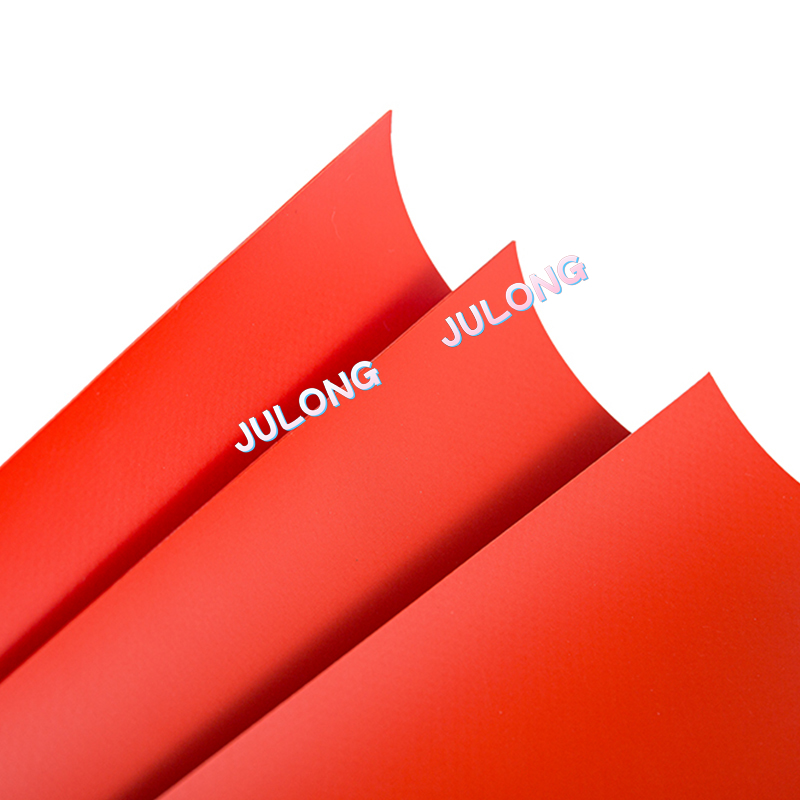
عربىTarp for Truck Cover




Content
In the language of contemporary architecture, few design strategies hold as much practical and poetic weight as architectural shading. It is the quiet discipline of intercepting sunlight before it strikes a building's skin — a gesture that can transform a glass-heavy facade from an energy liability into a finely tuned climatic instrument. When deployed thoughtfully, shading reduces cooling loads, mitigates glare, protects interior furnishings, and gives a building a distinct visual identity through the choreography of light and shadow.
From fixed concrete louvers and perforated metal screens to retractable fabric canopies and tensile membrane structures, the designer's palette for sun control is remarkably broad. Yet for all its complexity — the solar angles, the thermal dynamics, the competing demands of daylight and view — the fundamental question remains deceptively simple: how does one design a building so that the sun works with it, rather than against it?
At Anhui Longsheng New Material Technology Co., Ltd., we have spent more than a decade exploring this question from the material side. As a manufacturer of PVC-coated polyester fabrics and architectural membrane materials, we have seen how textile-based shading systems are increasingly favored for their lightness, flexibility, and cost-effectiveness. This article offers a working guide to architectural shading — its basic principles, its major typologies, and the expanding role of high-performance coated fabrics in exterior sun control.
Architectural shading is founded on a simple physical principle: sunlight carries heat, and the most efficient way to keep heat out of a building is to stop it before it enters. A building that experiences low solar heat gain requires less mechanical cooling, which translates directly into lower energy consumption and a smaller carbon footprint. Research consistently shows that well-designed shading devices can reduce cooling energy demand in hot climates by a significant margin — in some cases by 30 percent or more.
But there is more to shading than energy arithmetic. In spaces dominated by glass, the contrast between bright window areas and darker interior surfaces creates visual strain. A well-designed sun-shading system moderates this contrast, improving visual comfort without forcing occupants to close blinds and switch on lights. In glazed atria, lecture halls, and offices, careful shading makes deeply daylit spaces genuinely usable spaces — not merely impressive ones.
The passive nature of the strategy is its greatest appeal. Unlike active cooling systems that demand constant energy input, a well-placed shading device simply sits there, doing its job without moving parts or fuel. When combined with the natural ventilation benefits of higher window openings and thermal mass in walls, it forms the backbone of a passive design strategy — an approach that rewards the designer who thinks about the sun path before the mechanical load calculation.
The first major decision in shading design is whether to use a fixed or movable system. Each has its logic, and each finds its place in different climatic and programmatic contexts.
Fixed external shading devices include horizontal overhangs, vertical fins, and the familiar brise-soleil — a structural screen of vertical or horizontal blades placed in front of the facade. Their principal advantage is simplicity: with no moving parts, there is little that can fail, and routine maintenance is often limited to periodic cleaning. In predominantly sunny climates, where cooling loads dominate the annual energy balance, fixed devices can be tuned to admit low winter sun while excluding high summer sun, simply by setting the blade geometry to the latitude-specific solar angles.
Movable shading devices — among them external venetian blinds, folding shutters, and retractable awnings — respond to the sun's movement with greater precision. They allow the occupant to trade daylight against privacy at the turn of a handle or the push of a button. Dynamic facades equipped with motorized shading have become signature elements in modern commercial architecture, where the building skin itself appears to breathe across the day.
The trade-off, of course, is complexity. More moving parts mean more potential failure points, more maintenance, and typically a higher installed cost. For many projects, the more economical route is a hybrid strategy: fixed shading on orientations with predictable sun exposure, combined with operable interior blinds for glare control and occupational comfort.
Mature deciduous trees planted along eastern and western facades are among the oldest forms of architectural shading, and they are worth remembering for any project that has space for landscape. Their seasonal rhythm is a naturally scheduled shading system — leaves forming a sun screen in summer, falling away to let winter sun through the bare branches. Green facades and vertical gardens extend the same principle vertically, though they demand more sustained irrigation and structural support than conventional shading systems.
The material of a shading device determines how it performs by measures of optical, thermal, and structural behavior. For opaque fixed elements such as precast concrete or aluminum louvers, the primary concerns are structural durability and surface finish. Metal louvers with a powder-coated finish are common in both galvanized steel and extruded aluminum profiles. They offer precision, a long service life, and a high level of design control over the percentage of open area.
For glazed facades, a growing family of high-performance glass products achieves solar control within the glazing itself. Solar-control glass sits at the other end of the spectrum from heavy external shades: it filters radiation as it passes through, reflecting a portion of infrared energy while admitting visible daylight. While the most elegant of solutions in visual terms, solar-control glass often has limited flexibility once manufactured, which is why many designers pair it with external fabric screens for a layered strategy.
In the textile category — where our company's own experience resides — the material acts as a flexible, sometimes semi-transparent skin stretched across a light frame. A PVC architectural membrane can serve as a tensioned canopy, a vertical shading sail, or a retractable awning, offering a dramatically different design vocabulary than rigid louvers. Textile shading systems are inherently lightweight, which reduces the structural load on the supporting frame, and they can span large distances without intermediate supports, making them particularly suitable for public spaces, courtyards, and podium levels.
Among the various shading approaches reviewed above, textile membrane structures deserve particular attention — and not only because they are the field we know best. In the past two decades, architectural membranes have moved from the fringes of temporary tents and exhibition halls to become a durable, code-approved building material family in their own right. The key difference between a high-quality architectural membrane and an ordinary tarpaulin lies in the coating system: a premium fabric makes use of stabilized polymers that resist ultraviolet degradation, microbial growth, and staining, and its performance is precisely documented in terms of tensile strength, tear strength, and translucency.
Polyester fabric coated with polyvinyl chloride (PVC) is the mainstream choice among cost-effective architectural membranes. The polyester base cloth gives the membrane its tensile strength and dimensional stability, while the PVC coating provides waterproofing, flexibility, and color retention. Where greater longevity is demanded, the PVC surface is further treated with a PVDF (polyvinylidene fluoride) lacquer or an acrylic finish. These surface treatments improve the fabric's resistance to ultraviolet radiation and atmospheric pollution, substantially extending its service life in outdoor applications.
For shading purposes, a moderately translucent membrane — typically with a light transmission of 8 to 15 percent — allows pleasant diffused daylight beneath the canopy while blocking the direct solar beam. This combination of shade and luminous ambiance is difficult to achieve with opaque constructions. A 400g PVC-coated polyester mesh fabric, for example, offers precisely this quality: its knitted mesh structure admits filtered light while cutting the direct sun. In our production line, this material is engineered for 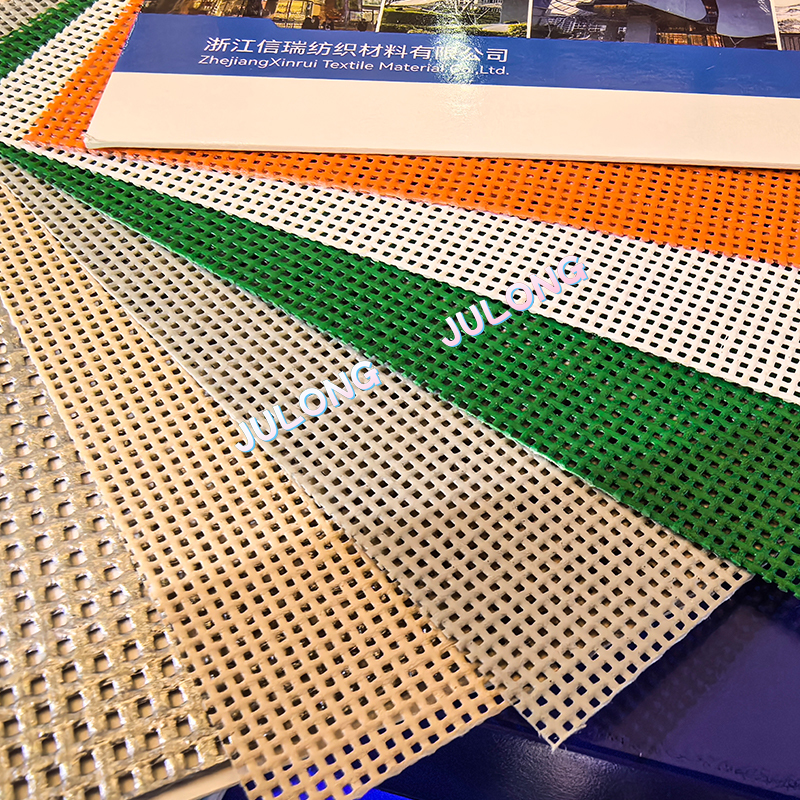 400G PVC-Coated Polyester Mesh Fabric for Outdoor SunshadesThis breathable mesh fabric offers 8–15% light transmission for filtered daylight while blocking direct sun, making it suitable for pergolas, walkway covers, and car park shading.View Product → — pergolas, walkway covers, car park shading, and building setback canopies — where its breathability is also an advantage in wind-prone sites.
For larger clear spans and higher wind-load demands, a tighter-woven membrane with a heavier coating weight is the usual choice. Our 1100g PVDF tensile membrane fabric goes into membrane-covered courtyards, entrance canopies, and tensile facade screens, where the PVC coating is finished with a PVDF lacquer to enhance self-cleaning behavior and UV stability. In regions with snow load, the 1250g PVDF architecture membrane material offers a larger safety margin, and, because the PVDF treatment substantially reduces the adhesion of atmospheric dust, the shade structure keeps a fresh appearance over many years of maintenance-free service. All three of these materials — the lightweight mesh for sun-shading and the two heavier membranes for structured tensioned canopies — find their natural place in the architect's mental library of shading solutions.
| Material | Coating weight | Typical use | Light transmittance |
|---|---|---|---|
| PVC mesh fabric | 400 g/m² | Pergola and walkway shading | 25–35% |
| PVDF tensile membrane | 1100 g/m² | Entrance canopies, tensile roofs | 8–12% |
| PVDF architecture membrane | 1250 g/m² | Large-span shade structures, snow zones | 6–10% |
| PVC/acrylic building membrane | 950 g/m² | Cost-effective facade screens | 10–15% |
Designing an effective shade structure is not a decorative exercise. A membrane canopy that merely casts a shadow is easy; one that does so without overheating, flapping, tearing, or becoming a maintenance burden is the result of disciplined design work.
In the northern hemisphere, the most demanding solar exposure typically comes from the west, where low-angle afternoon sun penetrates deep into room interiors. East facades receive strong morning sun, and south facades present a more manageable problem because the sun remains relatively high throughout the day. A well-conceived shading strategy identifies which facades need protection at which hours and sizes the canopy or louver accordingly.
Wind is the principal challenge for tensioned fabric structures. Unlike rigid louvers, a membrane is flexible and responds dynamically to gusts. The design work lies in giving the membrane the correct amount of curvature — double curvature is generally preferred — so that stresses are distributed evenly across the fabric surface rather than concentrated at fixing points. The supporting steel frame must absorb the dynamic forces, which requires wind tunnel testing or careful reference to wind load codes for large projects.
Shade is not the same as comfort. The effective temperature beneath a shading canopy depends on the radiation from the fabric itself: a light-colored, reflective membrane reduces the radiant heat load more effectively than a dark one. This effect is amplified when the underside of the membrane is glossy or coated with a reflective finish, a detail that an experienced membrane supplier will confirm from the material's measured solar reflectance.
Standing water shortens the life of any architectural membrane. Proper design gives the canopy enough slope and shaping so that rainwater sheds naturally without ponding at low points. Edge details must be sealed against moisture ingress, and the tensioning system should permit periodic re-tensioning as the fabric relaxes over the first months of installation.
Architects sometimes hold a lingering suspicion that fabric means short-lived. The modern reality is different. A well-specified architectural membrane with a PVDF finish, installed with appropriate detailing, commonly provides a service life of 15 to 25 years in outdoor use — a figure comparable to many conventional facade finishes. What the membrane offers beyond rigid systems is the possibility of replacement at the end of its life with relatively little waste: the fabric is recyclable in dedicated industrial streams, and the steel structure continues to serve.
Maintenance demands are modest but not zero. The primary enemy of a PVC-coated fabric is accumulated dirt, which can encourage the growth of micro-organisms and, in industrial atmospheres, bind combustion residues to the surface. Because a PVDF surface is inherently smoother and less porous than bare PVC, it resists staining and keeps its appearance with infrequent washing — generally a soft brush or a low-pressure rinse is sufficient. For mesh fabric screens exposed to intense ultraviolet radiation, the PVC formulation includes light stabilizers that slow the degradation process, and regular inspection every few years keeps the fabric working as intended.
From a whole-life perspective, textile shading structures have a persuasive sustainability story. Their light weight reduces steel quantities and foundation sizes compared to rigid roof alternatives. Their translucency cuts artificial lighting needs beneath the canopy. And at end of life, the separation of fabric from steel makes recycling straightforward — attributes that increasingly matter in green building certification schemes.
With the wide choice of shading devices available, selecting the right one is often a question of weighing priority criteria. The table below offers a quick orientation:
For a facade on which a retractable sun-screen is required, our 8mm PVC high-speed door fabric for industrial openings and interior partitions responds to a different logic — designed for rapid movement and hard-wearing operation.
Architectural shading is most effective where it is integrated into a building's overall environmental strategy. A membrane canopy that shades a west-facing facade should be seen together with the glazing specification, the insulation strategy, and the ventilation concept — not as an isolated feature. The tensioned fabric over a courtyard is not merely a geometric flourish; it defines a transition space where people sit, talk, and pause, protected from the harshness of solar radiation.
Working with a manufacturer that understands both the material science and the design intent makes a substantial difference. When you choose a PVC-coated polyester membrane, you are not picking a color from a sample card; you are choosing a set of physical properties — tensile strength, UV resistance, translucency, self-cleaning behavior — that determine how a shading structure will perform across its service life. This is where experience matters.
Our daily work at Anhui Longsheng involves precisely these calculations: measuring coating weights, testing weld seams, checking UV stability, and documenting tensile performance so that we can stand behind the numbers we provide. That is what a material supplier should bring to an architectural project — not just a bill of materials, but the confidence that the numbers on the data sheet will be the numbers on the site.
The sun is both a resource and an adversary in equal measure. Architectural shading is the ancient discipline of negotiating that relationship, refined by modern materials and calculation tools. Fixed louvers and brise-soleil continue to earn their place in rigorous minimalist design; dynamic systems add flexibility where the climate demands a change of heart; and textile membrane structures have grown into a mature, reliable member of the shading toolkit, offering lightness, spanning capacity, and a forgiving aesthetic warmth that hard materials struggle to reproduce.
Whatever direction your design takes, define your shading strategy early, verify the material performance honestly, and specify with the climate data of your site — not by generic fashion. A well-shaded building is a durable building, a comfortable building, and, in a time when every kilowatt-hour counts, an increasingly responsible one.
Win-win cooperation with new and old customers, create the future.

No. 9, Xingang Avenue, Ningguo City, Anhui Province, China.


+86 15397280550
Copyright © Anhui Longsheng New Material Technology Co., Ltd. Architecture Membrane Material Manufacturers Outdoor PVC Waterproof Fabric Supplier
