

Request A Quote
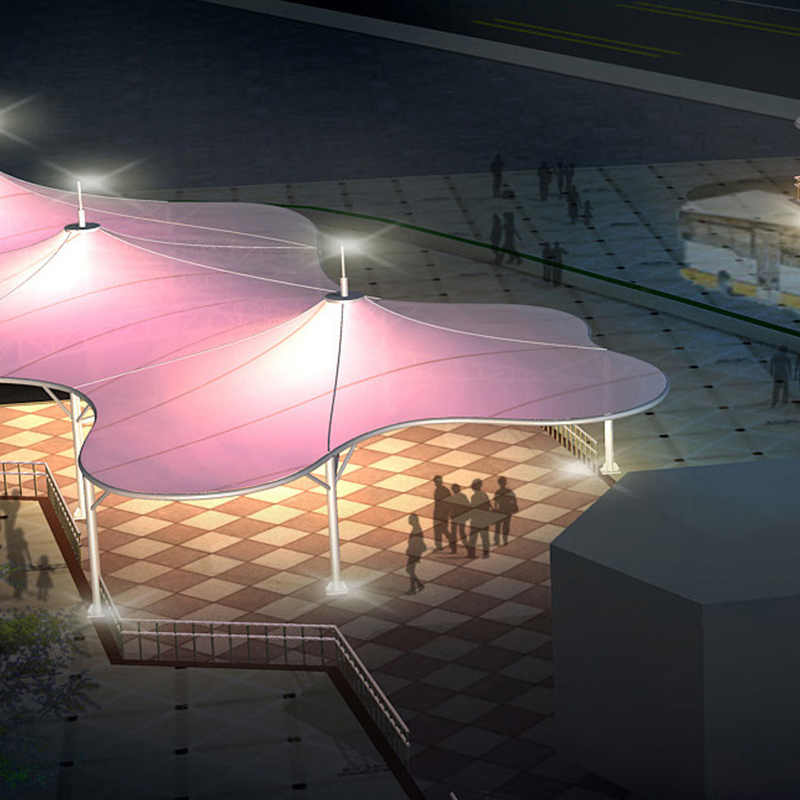
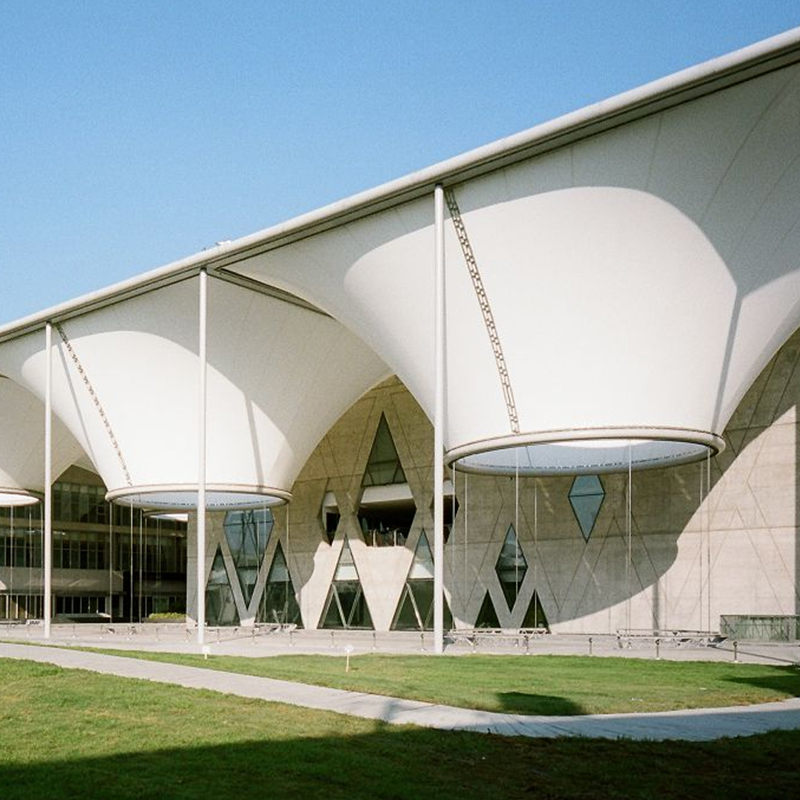
PTFE architectural membrane is a high-performance permanent tensile fabric, woven from fiberglass fabric and coated with polytetrafluoroethylene resin. It features Class A non-combustibility, outstanding self-cleaning property, superior UV and weather resistance, with a service life of over 25 years. The material provides soft natural daylight transmission, high tensile strength for long-span curved structures, and low maintenance cost. Widely adopted for landmark cultural centers, stadiums, exhibition halls, and large art corridor tensile cable-membrane composite projects.
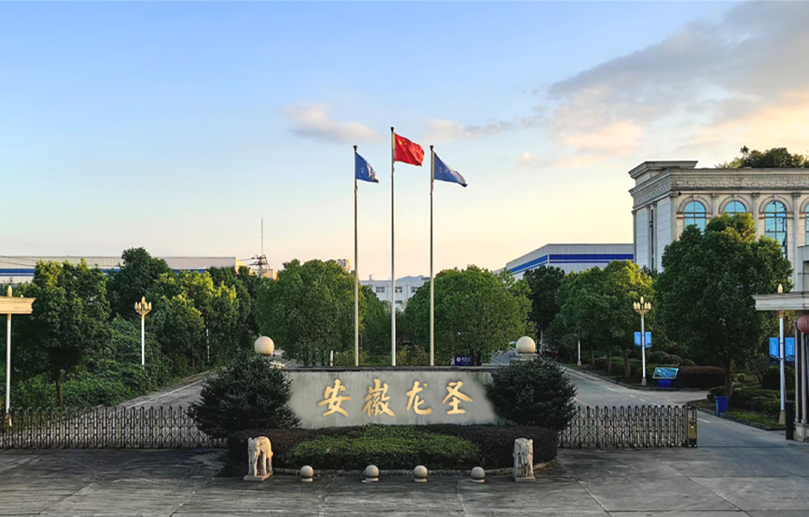
Anhui Longsheng New Materials Technology Co., Ltd. and Zhejiang Xinrui Textile Materials Co., Ltd. were established in 2010. The company specializes in the production of PVC coated fabric, PVC mesh fabric, TPU mesh fabric, mesh fabric and architectural film. The company is located in Qianjiang Industrial Park, Haining City. Since its establishment, it has been committed to the research, development, production and sales of high-quality architectural films or coated fabrics. As PTFE Architecture Membrane Manufacturers and PTFE Architecture Membrane Factory in China, The company has developed and produced products such as ultra-high strength membrane materials, anti-sweating, high light transmittance ultra-transparent membranes, sewage environmental protection membranes, and titanium dioxide membranes. Adopting the advanced technology in the field of European membrane materials, our products are sold well both at home and abroad and have received unanimous praise from customers. Our company's membrane products have been widely applied in large public facilities, such as park landscape buildings, carports, inflatable membrane structures, large sports venues, airport facilities and other construction fields. We supply WholesalePTFE Architecture Membrane. The company has always adhered to the business philosophy of striving for excellence and continuous innovation. Relying on advanced equipment and technology, as well as a forward-looking scientific research spirit, it produces high-quality products, and strives for win-win cooperation with both new and old customers to create a bright future together.
When a municipal sports department in a northern Chinese city needed an indoor tennis facility, it had three options: a rigid steel frame building, a tensioned...
View MoreWhen you specify a roof for a sports arena or a canopy for a transit hub, the material that spans the space is not ordinary canvas. It is an architectural fabr...
View MoreAn entrance canopy spanning 40 feet can look elegant and perform flawlessly for decades when the membrane and support steel are matched to the real wind and sn...
View MoreWalk through the lower bowl of a modern professional stadium and you will likely look up at a translucent, pillow-like roof that lets daylight wash over the se...
View MorePTFE architecture membrane is a coated fabric material used to create the structural skin of tensile buildings, combining a woven fiberglass base with a polytetrafluoroethylene coating that provides exceptional resistance to weather, chemicals, and ultraviolet exposure. This composite construction allows the membrane to function as both a load-bearing structural element and a weatherproof enclosure, eliminating the need for extensive rigid framing across large spans. Buildings such as stadiums, airport terminals, and exhibition centers rely on this material to achieve open, column-free interiors that would be difficult to construct using conventional roofing methods.
The membrane works within a tensile structural system, where the fabric is stretched across a network of cables, masts, or arches until it reaches a stable, taut form. Once properly tensioned, the material distributes wind and snow loads evenly across its surface, converting what would otherwise be a passive covering into an active structural component. This is why the quality of the membrane fabric itself has a direct and measurable impact on the safety and longevity of the entire building.
The woven fiberglass core supplies the tensile strength required to carry structural loads, while the PTFE coating protects those fibers from moisture penetration, chemical attack, and prolonged sun exposure. Without this protective layer, fiberglass would degrade rapidly when exposed to outdoor conditions, losing strength and becoming brittle within a few years. The coating also gives the surface its characteristic smoothness, which contributes to the material's self-cleaning behavior during rainfall.
Several measurable performance characteristics explain why PTFE architecture membrane is frequently specified for permanent, high-profile structures rather than short-term installations. These properties directly affect maintenance costs, structural safety, and the overall lifespan of the building envelope.
| Performance Factor | Why It Matters |
| Chemical resistance | Withstands pollution, acid rain, and industrial emissions without breaking down |
| UV stability | Prevents yellowing and strength loss after years of direct sun exposure |
| Fire performance | Meets fire safety codes required for large public assembly buildings |
| Self-cleaning surface | Reduces the frequency and cost of manual cleaning over the building's life |
| Service lifespan | Typically exceeds 25 years, outperforming many alternative fabric coatings |
Because of this combination of durability and low maintenance demand, PTFE membrane often proves more cost-effective over the full life of a building than materials with lower upfront costs but shorter service lives and higher upkeep requirements.
A distinguishing feature of PTFE membrane is its ability to transmit soft, diffused natural light into the interior, typically in the range of 10 to 20 percent light transmission depending on coating thickness. This reduces reliance on artificial lighting during daytime hours and creates bright, welcoming interior environments in large public spaces, an important consideration for stadiums, terminals, and exhibition halls where natural light contributes significantly to occupant comfort.
The long-term performance of PTFE architecture membrane depends heavily on the precision and consistency of the manufacturing process. Variations in coating thickness, uneven weaving of the fiberglass base, or inconsistent quality control can result in fabric that appears acceptable initially but develops cracking, delamination, or reduced tensile strength well before its expected service life is reached.
Anhui Longsheng New Material Technology Co., Ltd. manufactures PTFE architecture membrane with attention to consistent coating application and rigorous quality control throughout the production process. This focus on manufacturing precision is intended to help ensure that the fabric supplied to architectural projects meets the strength, chemical resistance, and weather durability standards necessary for long-span tensile structures intended to remain in service for decades.
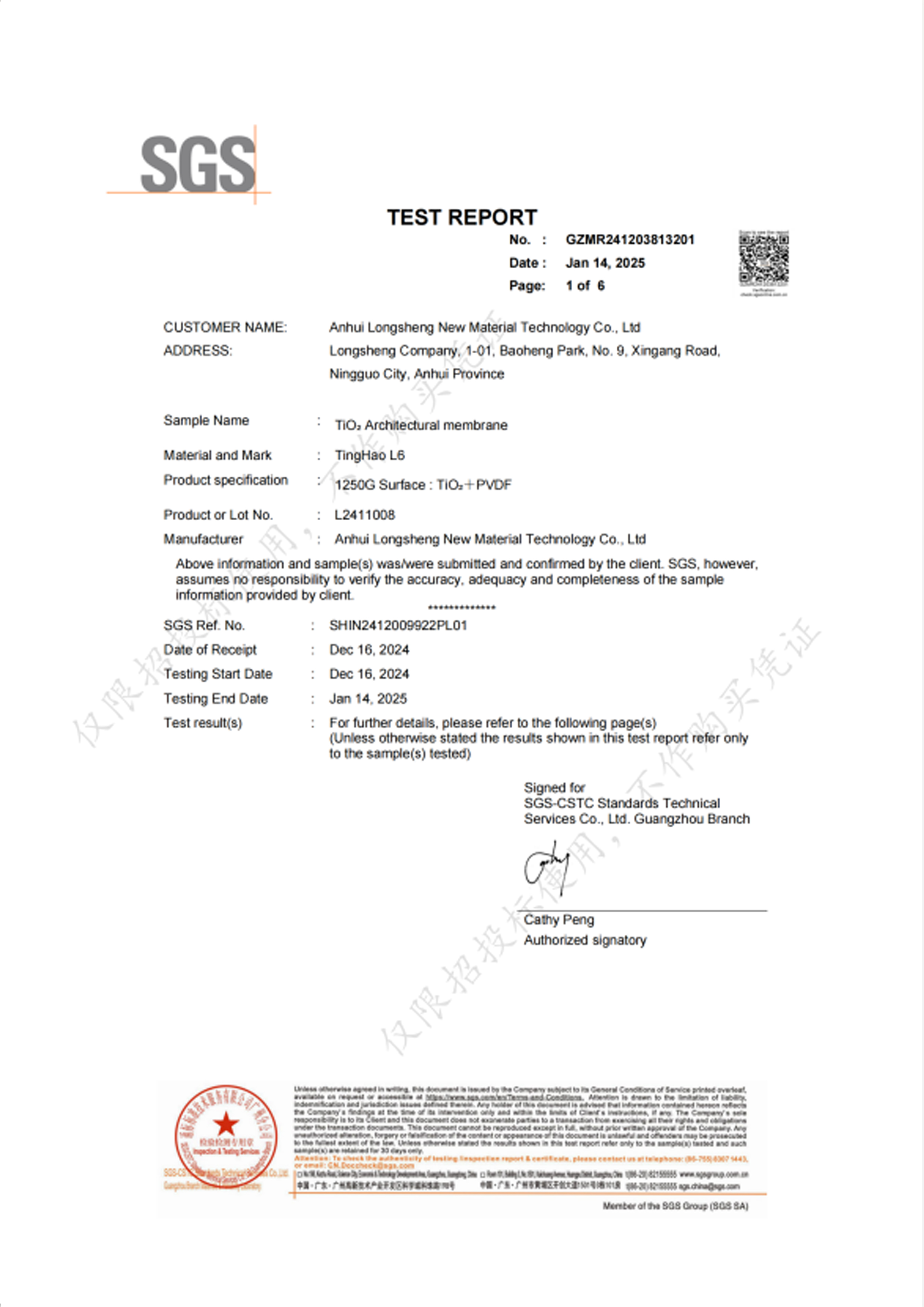
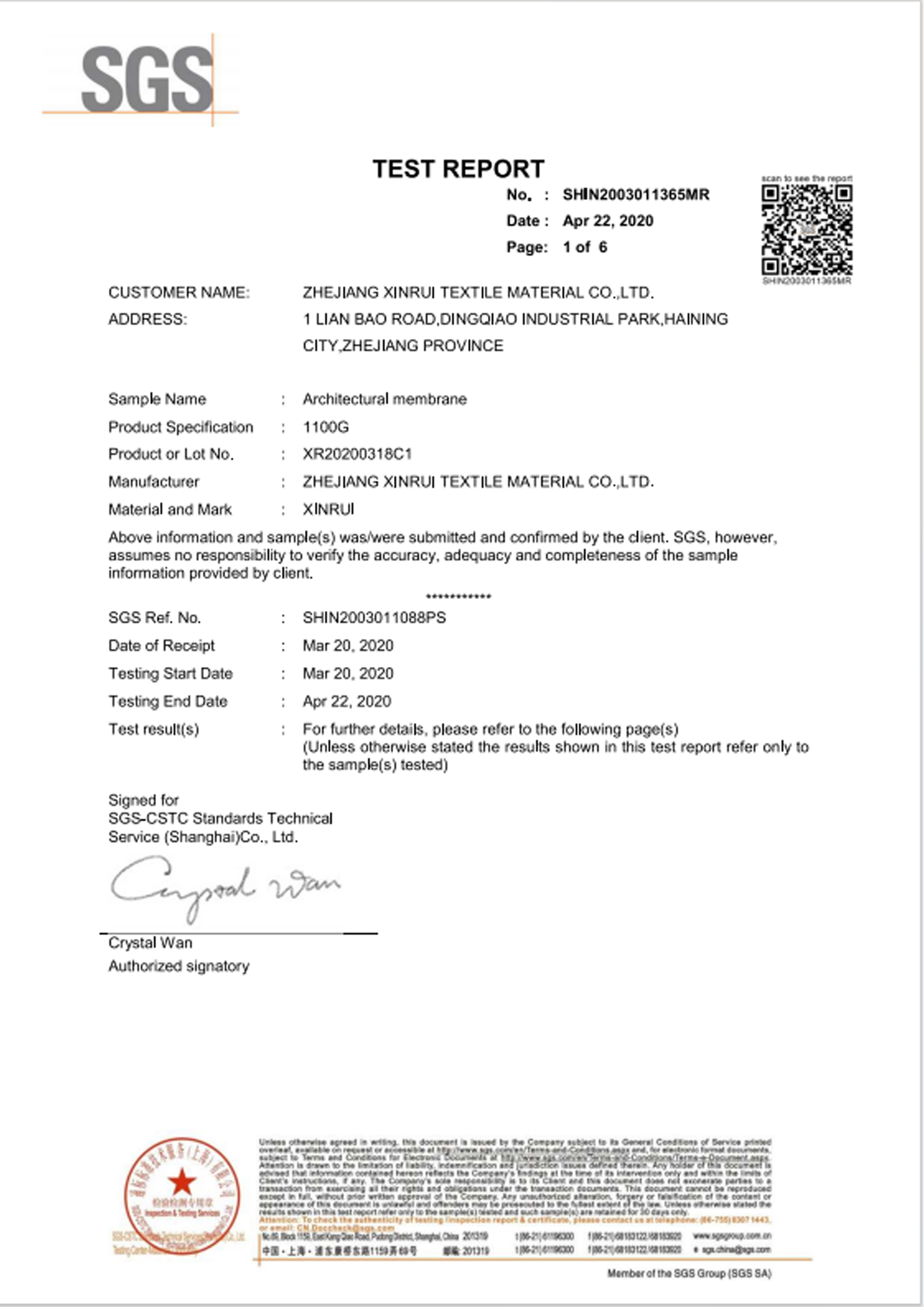
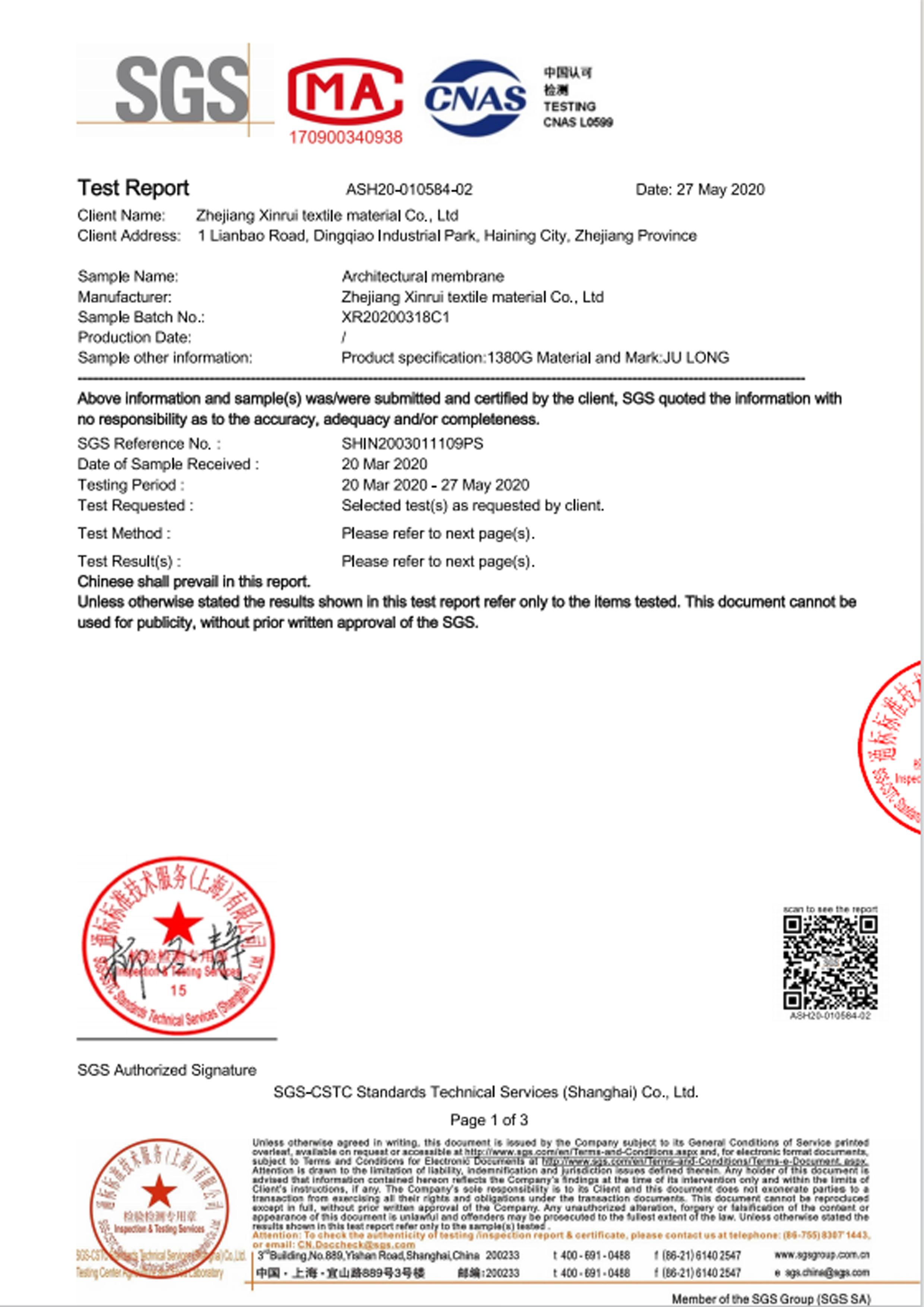
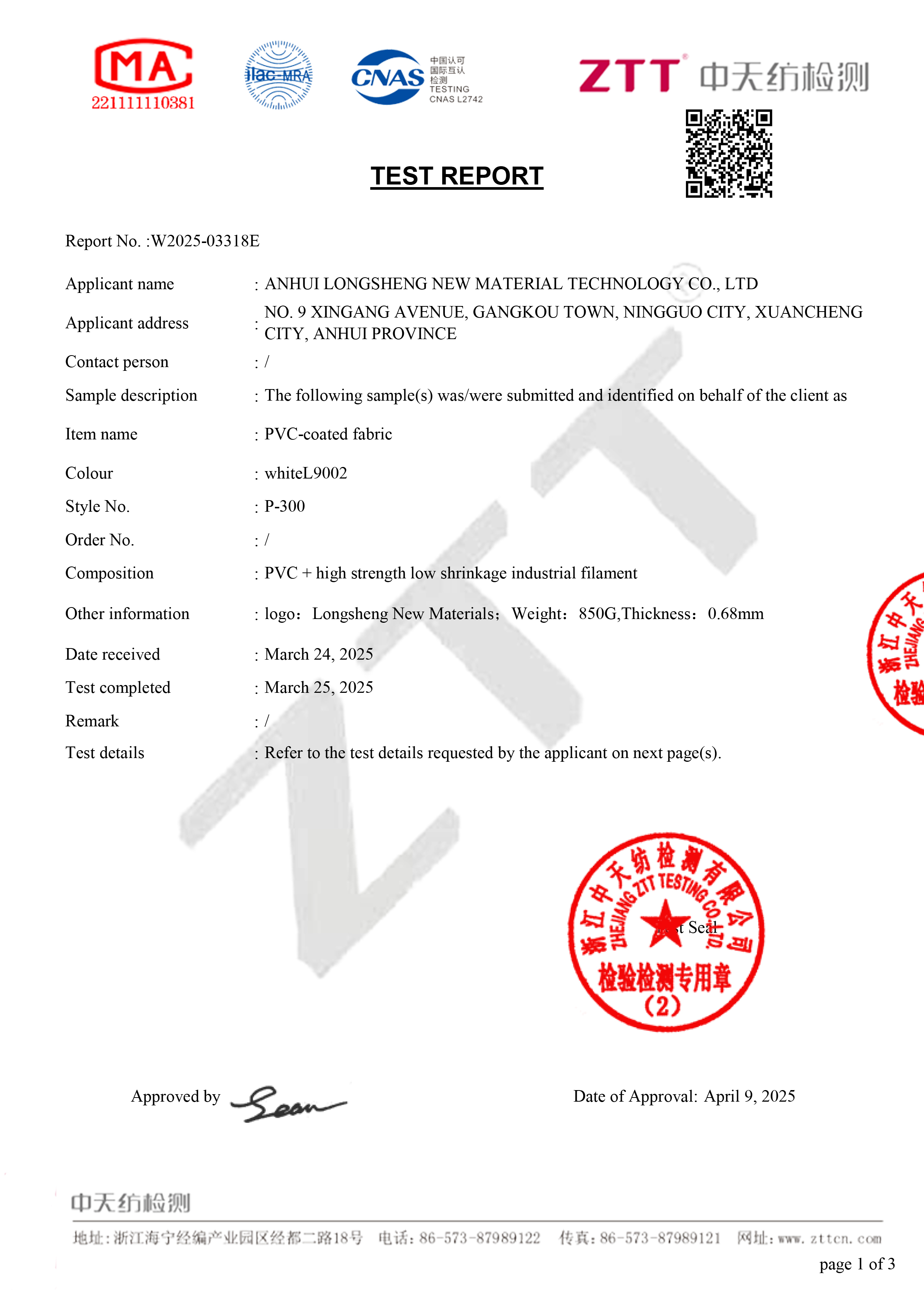
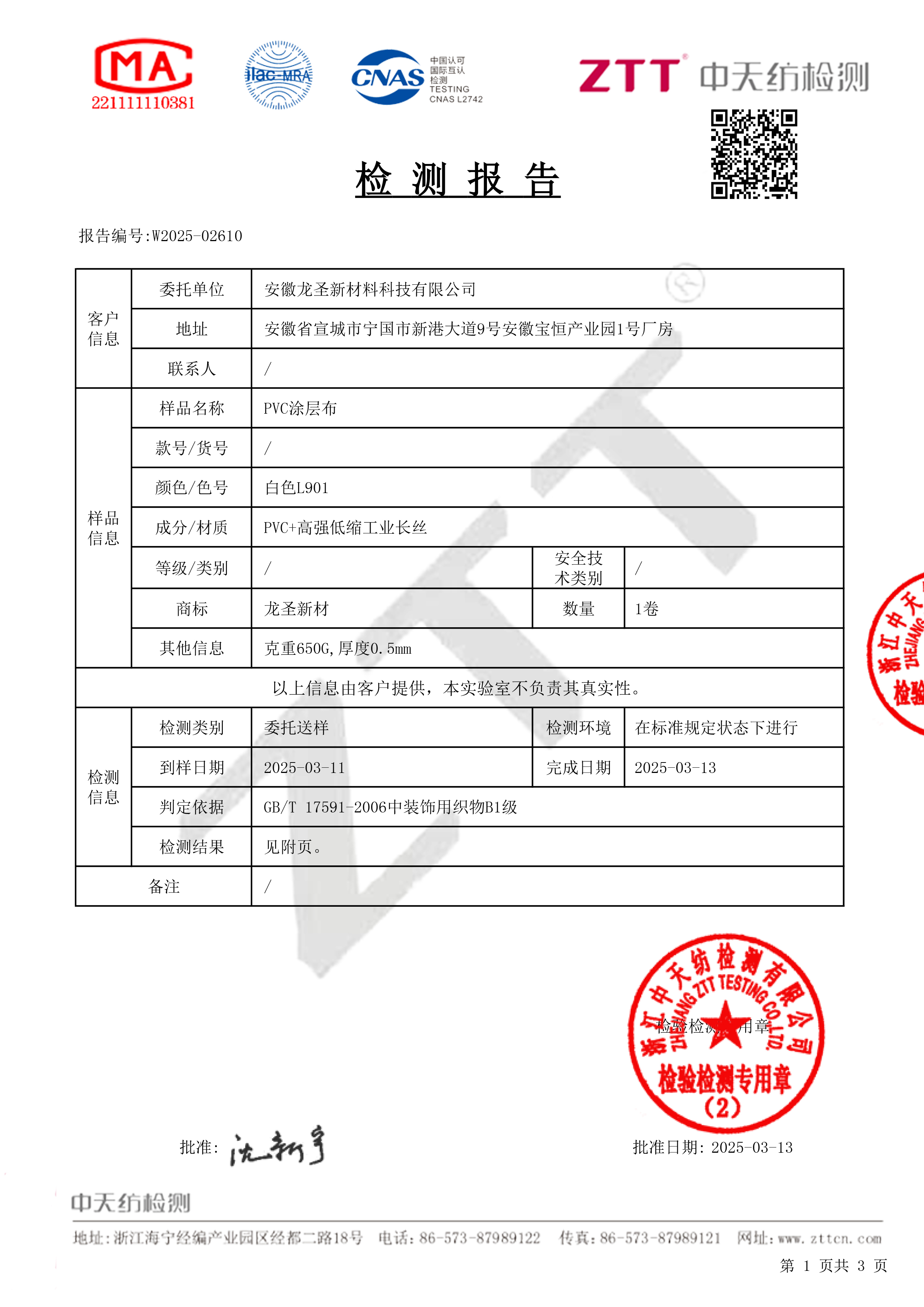
When sourcing PTFE membrane for an architectural project, it is important to request documented test data covering tensile strength, tear resistance, coating adhesion, and UV stability rather than relying solely on general product descriptions. Suppliers that provide transparent quality documentation and consistent production standards are generally better positioned to deliver fabric that performs reliably across the full range of environmental conditions a building may face over its lifetime.
Designing with PTFE membrane requires engineering approaches distinct from conventional rigid roofing systems. Because the material relies on tension rather than compression to carry loads, the geometry of the structure must be carefully shaped to avoid flat or shallow areas where water or snow could accumulate and create dangerous load concentrations.
Given these engineering demands, successful PTFE membrane projects typically involve close collaboration between architects, structural engineers specializing in tensile fabric systems, and fabricators experienced in precision patterning and welding.
Before installation, the overall membrane shape is digitally modeled and divided into individual fabric panels through a process called patterning. These panels are then cut and joined using heat-welding techniques that fuse the PTFE coating together without damaging the underlying fiberglass fibers. Accuracy at this stage is essential, since even minor deviations in panel dimensions can cause wrinkling or uneven tension once the membrane is installed and put under real structural load.
Architects and building owners evaluating PTFE architecture membrane for an upcoming project should approach the selection process systematically to ensure the material meets both design intent and long-term performance requirements.
Following this structured approach reduces the risk of specifying fabric that underperforms once installed and helps ensure that the final structure meets both aesthetic and functional expectations for its intended lifespan.
Routine maintenance remains important even for a material as durable as PTFE membrane. Periodic inspection of seams, tensioning cables, and edge connections helps catch minor issues before they develop into larger structural concerns, while keeping drainage paths clear prevents water or snow accumulation that could otherwise stress the membrane surface unevenly.
PTFE architecture membrane continues to stand out as one of the most durable and design-flexible materials available for large-span tensile structures. Its combination of chemical resistance, fire safety performance, natural daylighting, and long service life makes it a practical choice for architects seeking both functional performance and visual distinction. Working with manufacturers such as Anhui Longsheng New Material Technology Co., Ltd., which emphasizes consistent production quality, can help ensure that the membrane selected for a project delivers dependable performance throughout its intended service life.
Win-win cooperation with new and old customers, create the future.

No. 9, Xingang Avenue, Ningguo City, Anhui Province, China.


+86 15397280550
Copyright © Anhui Longsheng New Material Technology Co., Ltd. PTFE Architecture Membrane Factory WholesalePTFE Architecture Membrane


 English
 عربى
عربى PVC Tarpaulin
 PVC Coated Fabric
 PVC Coated Mesh Fabric
 PVC Coated Marquee Tent Fabric
 Tensile Architecture Membrane Fabric
 PVC High Speed Door Fabric