
 English
 عربى
عربىTarp for Truck Cover




Content
PTFE architecture membrane has revolutionized contemporary building design, enabling architects and engineers to create innovative, visually striking structures that combine aesthetic excellence with exceptional performance characteristics and environmental sustainability. Polytetrafluoroethylene (PTFE), commonly known by its trademark name Teflon, transforms into a remarkable material when processed into thin architectural membranes, delivering properties that distinguish it dramatically from traditional building materials. This specialized membrane material enables creation of lightweight, durable, weather-resistant structures capable of spanning impressive distances while maintaining transparency, translucency, or opaque characteristics depending on design requirements. Understanding the unique properties, manufacturing processes, design principles, and maintenance protocols for PTFE architecture membrane enables architects and building professionals to specify solutions that deliver exceptional performance, longevity, and aesthetic impact while optimizing construction costs and environmental considerations. This comprehensive guide explores every dimension of PTFE architecture membrane, from fundamental material properties through sophisticated structural applications, environmental benefits that distinguish it from alternatives, and practical considerations ensuring successful implementation and maintenance throughout the structure's functional life.
PTFE represents a fluorine-based polymer synthesized through polymerization of tetrafluoroethylene monomers, creating a material with exceptional chemical resistance, thermal stability, and non-adhesive properties that distinguish it among all known polymers. The molecular structure consists of a carbon backbone completely surrounded by fluorine atoms, creating a coating that repels virtually all substances while rendering the polymer immune to degradation from exposure to extreme conditions that would devastate conventional materials. This unique molecular architecture provides PTFE with an unparalleled combination of properties including near-zero coefficient of friction, superior weather resistance, and dimensional stability across extreme temperature ranges.
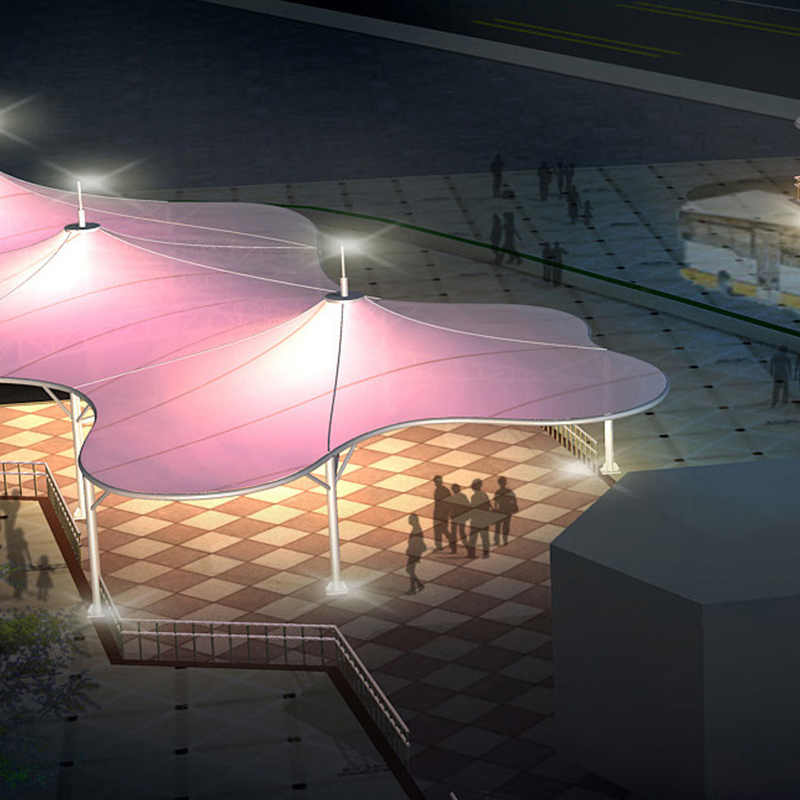
For architectural membrane applications, PTFE is processed into thin, flexible sheets typically 0.8 to 1.5 millimeters thick, creating materials that combine the fundamental PTFE properties with the flexibility necessary for architectural applications. The material's tensile strength reaches approximately 14-28 megapascals depending on thickness and processing parameters, providing structural capacity sufficient for supporting wind loads and weather exposure while remaining flexible enough to accommodate fabrication into complex curved forms. The elongation at break typically ranges from 200-400%, enabling membrane deformation under wind loading without tearing or permanent damage, with the material returning to original dimensions when external stresses release.
Translucency characteristics represent one of PTFE membrane's most distinctive features, with uncoated membranes transmitting approximately 8-12% of incident light while diffusing an additional 70-80%, creating a soft, glare-free interior lighting quality superior to many alternatives. This light-diffusing characteristic creates beautiful interior environments illuminated by natural daylight without harsh shadows or brightness contrasts that cause eye strain or discomfort. Various coating systems can modify these optical properties, enabling creation of opaque membranes for applications requiring complete light blockage, or enhanced transparency options where greater light transmission serves design objectives.
Thermal properties distinguish PTFE membrane from alternative materials, with the material maintaining flexibility and structural properties across temperature ranges from -100°C to +260°C, far exceeding the performance envelope of most competing materials. This exceptional thermal stability enables PTFE membranes to serve in locations ranging from arctic installations experiencing extreme cold to hot-climate applications where intense solar radiation elevates surface temperatures. The low thermal conductivity (approximately 0.19-0.26 W/m·K) provides modest insulating value while the high solar reflectivity of unpigmented membranes (approximately 70-75%) minimizes interior heat gain, reducing cooling loads in enclosed structures.
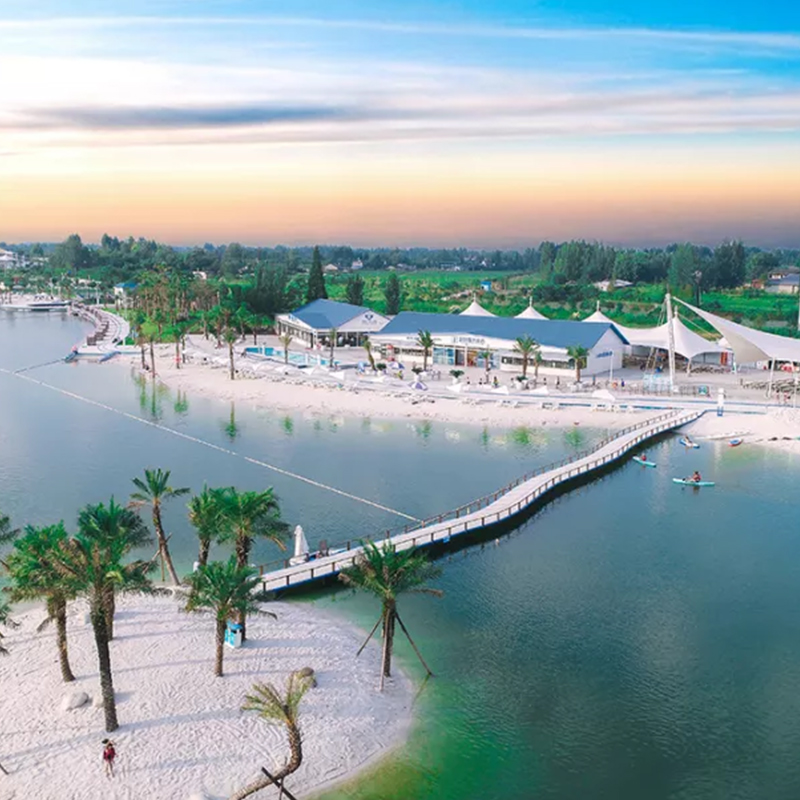
PTFE architecture membranes enable creation of cable-supported and pneumatic structures exploiting the material's exceptional strength-to-weight ratio and durability. Tensile membrane structures utilize high-strength cables or internal pressure differential to support PTFE membrane surfaces that distribute loads through a combination of membrane tension and supporting structure interaction. This approach enables creation of dramatic, efficient forms spanning large distances with minimal internal obstruction, ideal for stadiums, exhibition halls, concert venues, and other applications requiring unobstructed interior spaces. The legendary Denver International Airport terminal and Jeddah Hajj Terminal demonstrate PTFE membrane's capability to create iconic architectural statements while delivering exceptional performance and longevity.
Pneumatic structures employing PTFE membranes utilize internal air pressure differentials to support the membrane envelope against external loads, creating air-supported dome structures capable of spanning 100+ meters with minimal intermediate supports. This structural approach enables rapid deployment and modification compared to conventional construction, making pneumatic structures valuable for temporary installations, emergency facilities, and situations where construction speed or flexibility drives design decisions. The exceptional durability of PTFE enables these structures to operate reliably for decades despite continuous environmental exposure, dramatically extending service life compared to fabric alternatives requiring replacement every 10-15 years.
Hybrid structures combining PTFE membranes with rigid structural frameworks enable creation of sophisticated architectural forms combining the lightness and flexibility of membrane structures with the structural certainty of conventional systems. These approaches prove valuable in urban contexts where complex geometries or integration with existing structures demand sophisticated design solutions. Curved surfaces, spiral forms, and other complex geometries become feasible through PTFE membrane capabilities, enabling architects to express creative visions while maintaining practical structural performance and constructability.
Environmental control structures including greenhouses, growing facilities, and climate-controlled outdoor spaces benefit dramatically from PTFE membrane's optical properties, weather resistance, and durability. The material's transparency to light while blocking harmful UV radiation creates optimal growing environments while the exceptional weather protection eliminates concerns about water penetration or structural degradation affecting operation. Agricultural applications including crop protection structures, horticultural facilities, and livestock shelters leverage PTFE membrane's durability and low maintenance requirements, reducing operational costs compared to conventional construction approaches requiring frequent repairs or replacement.
| Application Type | Typical Span | Primary Advantage | Service Life |
| Tensile Structures | 50-200+ meters | Dramatic forms, efficiency | 30-50 years |
| Pneumatic Domes | 100+ meters | Rapid deployment | 40+ years |
| Hybrid Structures | 20-150 meters | Design flexibility | 35-50 years |
| Agricultural/Environmental | 10-100 meters | Durability, low maintenance | 40+ years |
PTFE architecture membrane delivers remarkable sustainability benefits throughout its lifecycle, from minimal manufacturing environmental impact through decades of operation with virtually no maintenance requirements. The exceptional durability and weather resistance eliminate the necessity for frequent replacement that characterizes many alternative materials, dramatically reducing lifecycle environmental impact compared to structures requiring material replacement every 10-15 years. A PTFE membrane installed in the 1980s remains in service today with minimal degradation, testimony to the material's exceptional longevity and the environmental wisdom of initial investment in superior materials.
The lightweight nature of PTFE membrane structures reduces raw material consumption and construction resource requirements compared to conventional buildings utilizing concrete, steel, and masonry construction. A single-layer PTFE membrane weighs approximately 700-1000 kg per thousand square meters, requiring minimal supporting structure compared to conventional roofing materials. This lightweight characteristic reduces foundation requirements, construction sequencing complexity, and equipment demands, accelerating construction schedules while minimizing site disturbance and operational impacts.
Energy performance advantages emerge from PTFE membrane's optical and thermal properties, combining light diffusion enabling productive daylighting with solar reflectivity reducing cooling loads. The soft, glare-free interior lighting creates pleasant visual environments reducing reliance on artificial lighting throughout daylight hours. Structures oriented strategically can harness solar heat gains during winter months while minimizing excessive summer heating through design optimization. The material's non-toxic composition and inert chemical nature eliminate emissions or off-gassing concerns present with some building materials, contributing to healthy indoor air quality and superior occupant wellbeing.
Recyclability represents another sustainability advantage, with end-of-life PTFE membranes potentially recoverable through grinding and reprocessing into new applications, though most installations continue operating indefinitely rather than requiring replacement. The exceptional inertness and chemical resistance enabling PTFE's performance benefits also mean it persists essentially unchanged in landfills rather than degrading into environmental contaminants, presenting a different sustainability profile than biodegradable alternatives. Modern disposal practices increasingly incorporate recovery and reprocessing, extending material utilization and minimizing environmental burden.
Successful PTFE architecture membrane projects require sophisticated design practices accounting for the material's unique properties, structural behavior characteristics, and environmental interactions. Wind engineering plays a critical role, as membrane structures experience wind pressures and suctions that conventional rigid structures tolerate through internal strength, while membranes distribute these forces through geometric tension and structural supporting systems. Computational fluid dynamics modeling optimizes structural geometry to minimize turbulent flow separation and vortex formation that could cause flutter or resonant oscillations threatening structural integrity.
Drainage design proves essential, as the slight surface irregularities and seams in PTFE membranes create potential collection points for water accumulation. Proper sloping ensures that rainwater flows toward designed drainage points rather than ponding, preventing the buildup of water weight that could over-stress membrane structures or create aesthetic problems. Guttering and downspout systems must accommodate the volume of water typical for the geographic location while maintaining aesthetics consistent with the distinctive appearance PTFE membranes provide. Snow loading calculations account for the membrane's low coefficient of friction, recognizing that snow can slide off surfaces more readily than on rougher roofing materials, which simplifies snow management but requires consideration in design load calculations.
Seaming and connection design requires specialized expertise, as seam strength determines overall membrane performance and the connections between membrane and supporting structure must accommodate differential movement without creating stress concentrations or leak paths. High-frequency welding bonds adjacent PTFE sheets together, creating seams nearly as strong as the base material while maintaining flexibility essential for membrane structures. Mechanical connectors with proper washers and isolation materials prevent localized stress concentrations that could initiate tears propagating through the membrane.
PTFE architecture membrane's exceptional weather resistance and non-adhesive surface properties enable maintenance programs far simpler and less costly than conventional roofing or building envelope materials. The smooth, non-porous surface resists the accumulation of dirt, algae, and biological growth that degrade the appearance of porous materials, with most contaminants washing away during rainfall or easily removable through gentle cleaning. The inherent cleanliness of PTFE membranes maintains the brilliant white appearance characteristic of uncoated material, or retains colored pigmentation in pigmented formulations without degradation that affects conventional materials.
Periodic inspection schedules enable early identification of seam separation, punctures, or other damage allowing prompt repair before water penetration or structural compromise develop. Modern repair techniques including high-frequency welding enable sealing of holes and tears comparable to factory seams, with properly executed repairs restoring full performance. The exceptional stability of PTFE resists the degradation processes that compromise most materials, with membranes installed decades ago remaining substantially unchanged except for predictable surface weathering producing a slightly frosted appearance without affecting functionality or structural properties.
No painting, re-coating, or protective treatments prove necessary to maintain PTFE membrane performance, distinguishing it from fabric membranes requiring periodic coating renewal or metal surfaces requiring corrosion protection. The material's chemical inertness eliminates concerns about degradation from exposure to salt spray, industrial pollutants, or environmental contaminants that attack conventional materials. Temperature cycling that causes dimensional changes and stress in conventional materials leaves PTFE membranes essentially unaffected, enabling reliable performance across climatic extremes from arctic to tropical environments.
PTFE architecture membrane outperforms fabric-based alternatives including PVC-coated polyester and ETFE in long-term durability and maintenance requirements, though the initial material cost exceeds these alternatives. Fabric membranes typically require replacement every 20-30 years as coatings degrade and material properties diminish, whereas PTFE membranes remain functional for 40-50 years or longer with minimal maintenance. When calculated over a building's operational life, the total cost of ownership including replacement labor, operational disruption, and potential environmental impacts frequently favors PTFE despite higher initial material cost.
ETFE, a fluorine-based polymer competitor to PTFE, offers greater optical clarity enabling creation of more transparent membranes but at substantially higher cost and with inferior durability in many environmental conditions. ETFE's application potential differs from PTFE, with ETFE more suitable for applications prioritizing optical clarity while PTFE serves applications emphasizing durability, weather resistance, and cost-effectiveness. Metal and glass alternatives provide different aesthetic and performance characteristics but demand substantially greater structural support, generate higher operating costs, and compromise the distinctive aesthetic expression that membrane structures enable.
Lifecycle cost analysis comparing PTFE membrane structures to conventional alternatives frequently reveals surprising advantages despite higher initial membrane material costs. The reduced structural requirements, construction speed, minimal maintenance, and potential for adaptive reuse throughout extended service lives create economic advantages that accumulate significantly over 40-50 year operational periods. Buildings constructed with PTFE membranes decades ago continue providing service with minimal intervention, demonstrating the economic wisdom of initial investment in superior materials.
PTFE architecture membrane represents a transformative building material enabling innovative architectural expression combined with exceptional performance, environmental sustainability, and cost-effectiveness across the structure's operational life. The unique combination of properties—light diffusion, weather resistance, thermal stability, and minimal maintenance requirements—enables creation of buildings that are simultaneously visually distinctive and practically superior to conventional alternatives. As construction technology advances and environmental concerns drive decisions increasingly toward sustainable solutions, PTFE membrane's exceptional durability and minimal lifecycle environmental impact position it as a premier choice for architects and building professionals committed to excellence in contemporary architecture and environmental responsibility.
Win-win cooperation with new and old customers, create the future.

No. 9, Xingang Avenue, Ningguo City, Anhui Province, China.


+86 15397280550
Copyright © Anhui Longsheng New Material Technology Co., Ltd. Architecture Membrane Material Manufacturers Outdoor PVC Waterproof Fabric Supplier
